Table of Contents
Washington County Courts, GA *

The courts in Washington County, in east-central Georgia, hear different types of cases. Some county-level courts handle criminal cases ranging from minor traffic violations, such as running a stop sign, to a criminal trial for murder. They may hear civil cases such as probate or contract disputes. Washington County residents may need a court to solve a boundary dispute with a neighbor, a repair issue with a landlord, or a child custody case. Employers and landlords use court records to check criminal histories or eviction records. Lawyers need court records to prepare for upcoming criminal or civil trials. It is important to understand how the Washington County Court system works to save both time and stress.
How to Access Washington County Court Records

 Online Access
Accessing online records in Washington County is simple. For both State and Superior Court records, residents can check the Georgia Courts webpage to view records. They will need to create a free account in order to access the court records. For Magistrate Court records, people can use re:SearchGA to access those records.
 Alternative Online Options
Although Georgia is ahead of the curve when making state records available online, some people may find state court records searches difficult to navigate. If that's the case, people may want to use CourtCaseFinder. The platform provides an aggregated search tool that can access public court records, including court cases, divorces, arrests, and other filings from multiple sources. Third-party searches are helpful, especially when residents are unsure where the case was filed, which is understandable, as Washington County is located almost exactly between Augusta and Macon.
 In-Person Requests
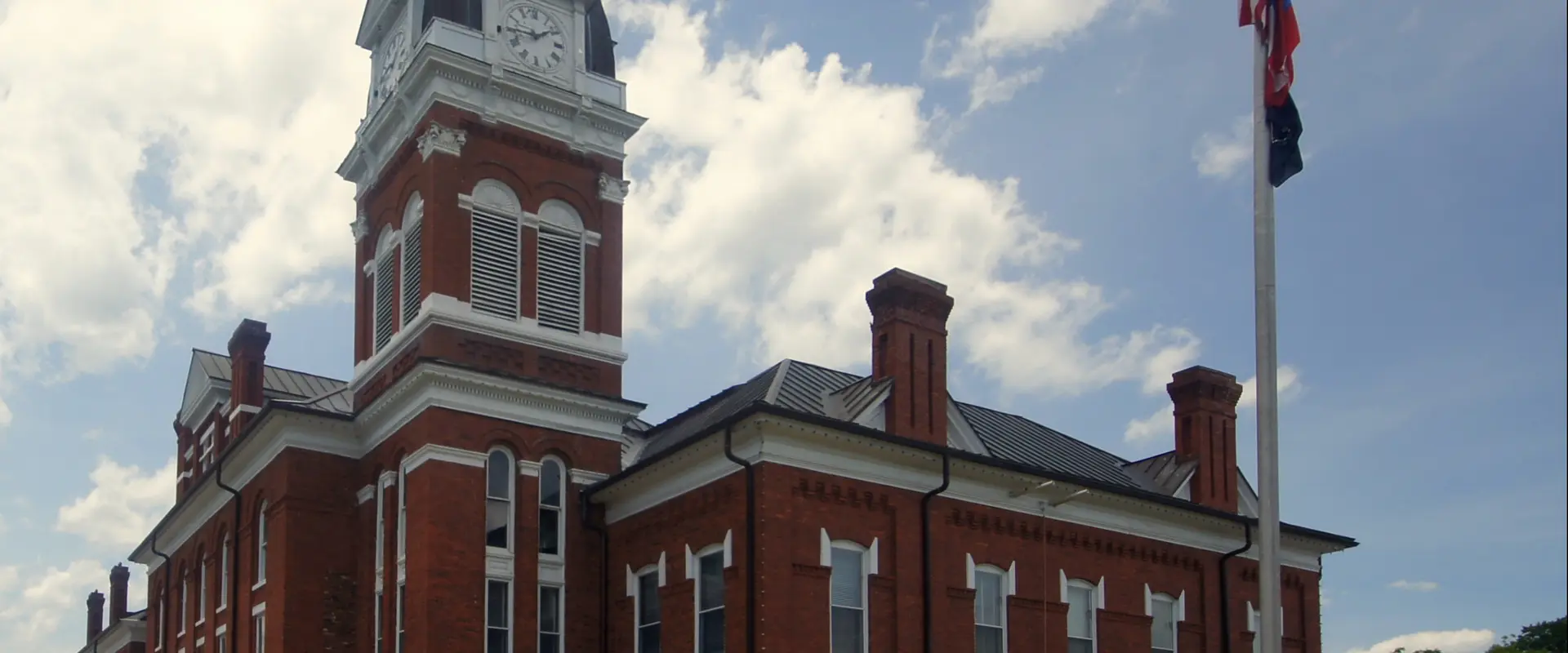
There are times Washington County residents may need to access records in person, especially if they need certified copies of court documents for another court or a government institution. People often request to view court documents in person or archived documents as well. The Clerk of Superior Court's Office can help residents who need documents at the county courthouse in Sandersville.
 Archived Records
Washington County has an extensive history because it was one of the first counties created after the Revolutionary War. The courthouse, which contained many court records, was burned twice, so it may be difficult to find archived court records. Archived records are any court records that are no longer needed by the court system. Residents who need to access archived court records should first check with the Clerk of Court for Washington County. There are also other resources available to access court records. Georgia has an archive that houses the older court records from across the state. The state also has a digital archive that holds court records as well as other documents, such as old periodicals.
Overview of the Washington County Court System

The Washington County Court System is part of the larger state court system in Georgia. All of the state courts in Georgia are managed by the Judicial Council of Georgia, headed by the Chief Justice of the Georgia Supreme Court. The Georgia Supreme Court is the state's highest appellate court. Below the Supreme Court is the intermediate appellate court, the Georgia Court of Appeals, which hears appeals from the Superior and State Courts in Georgia.
In Washington County, there are several court systems. The highest trial court in the county is the Superior Court. Washington County also has a State Court, which helps with the overflow from the Superior Court. The Magistrate Court in the county hears lower-level criminal and civil cases. There are Probate and Juvenile Courts located within the county as well. Municipal Courts, which represent the lowest court type in Georgia, are located in three towns in Washington County.
Types of Courts in Washington County, Georgia
 Superior Court
The Superior Court represents the highest trial court in Washington County. The Superior Court hears felony cases, family law cases, and civil cases with large damages or policy changes. In Georgia, each Superior Court is in a Judicial District, and judges rotate between courthouses in the district to hear cases. Washington County is in the Middle Judicial District (8th District), which also includes Jefferson, Emanuel, Toombs, and Candler counties. The headquarters of the Middle Judicial District is at the Washington County Courthouse.
Jurisdiction:
- All felony cases
- Large civil cases with damages over $15,000 or policy changes requested
- Family law cases, such as adoptions, divorce, child custody and support
- Protective orders
- Land and title disputes
- Garnishments
Primary Location: Washington County Courthouse, Sandersville
 State Court
Many Georgia counties have a State Court to help the Superior Courts with caseloads. The State Court of Washington County is the primary trial court for misdemeanor criminal cases.
Jurisdiction:
- All misdemeanor criminal cases, such as theft or assault
- Traffic violations occurring on county roads
- Civil cases with damages in excess of $15,000
Primary Jurisdiction: Washington County Courthouse, Sandersville
 Magistrate Court
The Magistrate Court in Washington County hears civil cases with damages under $15,000 as well as small claims cases and eviction and foreclosure cases. The court also hears preliminary actions in criminal cases that will be heard in the Magistrate, State, or Superior Courts. There are no jury trials in Georgia's Magistrate Court system.
Jurisdiction:
- Landlord-tenant issues, such as evictions and dispossessory orders
- Foreclosures
- Competency hearings
- Garnishments and collections for debts
- Arrest, search warrants and preliminary hearings
- Bad check or low-level financial fraud
- County ordinance violations
Primary Location: Washington County Courthouse, Sandersville
 Juvenile and Probate Courts
Georgia law requires that Juvenile and Probate Courts be separated from the other courts in the county. The Juvenile Court hears nearly all cases involving juveniles. Probate Courts handle cases involving estates of people who are deceased or in need of extra supervision.
Jurisdictions:
- Juvenile Court:
- Juveniles who commit crimes (juvenile delinquency)
- Juveniles who are neglected or abused (juvenile dependency)
- Hearings to determine if a juvenile can be tried as an adult
Probate Court:
- Wills and estates
- Appointments of administrators for estates
- Guardianships for mental illness or incapacitation of adults
Primary Location: Washington County Courthouse, Sandersville
 Municipal Court
There are three municipal courts in Washington County. Municipal Courts hear ordinance violations and minor traffic citations that occur within the city limits of Davisboro, Harrison, and Sandersville.
Jurisdiction:
- City ordinance violations, such as noise complaints or unkempt lawns
- Traffic or parking citations occurring within the city, such as parking zone violations
Primary Locations: City Halls in Davisboro, Harrison, and Sandersville
How to File a Case in Washington County

Many people don't understand how to file a civil case in the court system until they quickly need to learn. The steps for filing a court case are outlined below, so residents of Washington County can use the steps to help make the filing process easier.
 Step 1: Choose the Correct Court
The first step in any filing process is for a resident to choose the correct court to file in. In Washington County, choosing the correct court is simple because all court cases must be filed through the Clerk of Court at the Washington County Courthouse. It doesn't matter if someone needs to file in Superior, State, Juvenile, Probate, or Magistrate Courts; all court cases are filed with the same Clerk of Court.
 Step 2: Complete Required Forms
Once a resident knows the correct court they need to file in, the next step is to complete all the forms needed to begin the civil case. There are several places to find forms to file. The Clerk of Court's Office has forms available on their website. Residents can also find forms on the Georgia Courts website. Magistrate Court forms are available on the Council of Magistrate Court website. The Clerk of Court's Office can help if a resident has difficulty filling out forms or paperwork.
 Step 3: File the Case
Filing a civil case in Georgia is easy. Georgia allows residents of Washington County to file online or in person, but attorneys must always file online. People who want to file online can file through eFileGA. If someone chooses to file in person, they will take their paperwork to the Clerk of Court's Office. Residents who have questions about filing can check with the Clerk of Court prior to filing.
 Step 4: Pay Filing Fees
Filing fees for civil cases depend on the amount of damages asked for and the court it is filed in. A large civil case in Superior Court will have a different filing fee than a small claims case filed in Magistrate Court. The Clerk of Court has a list of filing fees on their website. Online filers will pay at the time they file with a credit or debit card. In-person filers can pay filing fees with a card, a money order, or a cashier's check. Georgia law allows a fee waiver, but residents must file the request and be willing to prove indigency.
 Step 5: Serve the Other Party
Georgia courts have rules about serving the other party in a civil lawsuit. Residents cannot serve the other litigant themselves; instead, they must have a sheriff's deputy, a process server, or a neutral adult serve the paperwork that notifies the defendant they are being sued. Regardless of who serves the defendant, paperwork has to be filed with the court showing the defendant was properly served with the civil suit.
 Step 6: Monitor the Case
Monitoring the case's progress is a simple process, but it is important because if someone does not follow the case's progress, they could miss updates and risk case dismissal or delays. Residents who want to monitor the case online can use eFileGA or re:SearchGA. People can also call or visit the Clerk of Court's Office to get case updates.
Washington County Courthouse Directory
Washington County Courthouse (Superior, State, Juvenile, Probate, and Magistrate Courts)
Sandersville
Address: 132 W Haynes St, Sandersville, GA 31082
Phone: (478) 552-3186
Website: Washington County Clerk of Court
Municipal Courts
Davisboro Municipal Court
Address: 201 South Main Street, Davisboro, GA 31018
Phone: (478) 348-4400
Harrison Municipal Court
Address: 40 N. Railroad Avenue, Harrison, GA 31035
Phone: (478) 552-7640
Sandersville Municipal Court
Address: 141 W. Haynes Street, Sandersville, GA 31082
Phone: (478) 552-2525
Legal and Self-Help Resources
Many Georgians are not sure how to traverse the legal process. Luckily, there are resources to help residents of Washington County with legal issues.
- Georgia Legal Aid has online self-help and legal resource guides for filers who want to manage their civil cases but also need assistance with the legal process.
- The Georgia Legal Services Program offers legal help for low-income Georgians through its office in nearby Macon. The intake forms are available online.
- Elderly Legal Assistance Program has resources and legal help for seniors over 60. The program offers local help in Washington County through a voucher program.
FAQs
How do I search for a criminal case in Washington County?
Washington County criminal case records are available from the State and Superior Courts at the Georgia Courts website. Residents can find information on Magistrate Court criminal records via re:SearchGA, which can also search for State and Superior criminal cases. People can always visit the Clerk of Court to access criminal court records.
Are court records public in Washington County?
Most court records are public in Washington County, as they are in all of Georgia, with some exceptions. Juvenile court records are not available because of the ages of the children involved. If a juvenile court criminal case is moved to adult court, the case will then be public record. Mental health commitments or guardianship cases are also not public. Judges can always order court records to be sealed.
Where can I find eviction records?
Usually, eviction records are handled at the Magistrate Court level. Residents can view them online via re:SearchGA. If the civil case is a large one, records will be found via the Superior or State Courts, and can be viewed at the re:SearchGA site as well. One can also visit the Clerk of Courts office to view records in person.
Other Counties in Georgia
- Appling
- Atkinson
- Bacon
- Baker
- Baldwin
- Banks
- Barrow
- Bartow
- Ben Hill
- Berrien
- Bibb
- Bleckley
- Brantley
- Brooks
- Bryan
- Bulloch
- Burke
- Butts
- Calhoun
- Camden
- Candler
- Carroll
- Catoosa
- Charlton
- Chatham
- Chattahoochee
- Chattooga
- Cherokee
- Clarke
- Clay
- Clayton
- Clinch
- Cobb
- Coffee
- Colquitt
- Columbia
- Cook
- Coweta
- Crawford
- Crisp
- Dade
- Dawson
- Decatur
- Dekalb
- Dodge
- Dooly
- Dougherty
- Douglas
- Early
- Echols
- Effingham
- Elbert
- Emanuel
- Evans
- Fannin
- Fayette
- Floyd
- Forsyth
- Franklin
- Fulton
- Gilmer
- Glascock
- Glynn
- Gordon
- Grady
- Greene
- Gwinnett
- Habersham
- Hall
- Hancock
- Haralson
- Harris
- Hart
- Heard
- Henry
- Houston
- Irwin
- Jackson
- Jasper
- Jeff Davis
- Jefferson
- Jenkins
- Johnson
- Jones
- Lamar
- Lanier
- Laurens
- Lee
- Liberty
- Lincoln
- Long
- Lowndes
- Lumpkin
- Macon
- Madison
- Marion
- Mcduffie
- Mcintosh
- Meriwether
- Miller
- Mitchell
- Monroe
- Montgomery
- Morgan
- Murray
- Muscogee
- Newton
- Oconee
- Oglethorpe
- Paulding
- Peach
- Pickens
- Pierce
- Pike
- Polk
- Pulaski
- Putnam
- Quitman
- Rabun
- Randolph
- Richmond
- Rockdale
- Schley
- Screven
- Seminole
- Spalding
- Stephens
- Stewart
- Sumter
- Talbot
- Taliaferro
- Tattnall
- Taylor
- Telfair
- Terrell
- Thomas
- Tift
- Toombs
- Towns
- Treutlen
- Troup
- Turner
- Twiggs
- Union
- Upson
- Walker
- Walton
- Ware
- Warren
- Wayne
- Webster
- Wheeler
- White
- Whitfield
- Wilcox
- Wilkes
- Wilkinson
- Worth
Table of Contents
