Table of Contents
Lamar County Courts, GA *

The Lamar County court system, located in west-central Georgia, hears a variety of cases, from simple traffic citations to felony trials. Civil cases heard in the county might include small contract disputes or large business disputes. Residents may need the court system for landlord-tenant disputes, custody or divorce issues, and employer-employee problems. Lamar County residents rely on court records to check prior eviction notices or foreclosures, criminal histories, or for legal preparations for court hearings. Knowing how the Lamar County system works or where to search for court records can help reduce time and stress.
How to Access Lamar County Court Records

 Online Access
Accessing Lamar County Court records online is an easy process. Residents can visit the Georgia Courts website to access records from the Lamar County Superior Court. Magistrate Court records for Lamar County can be found via the Georgia Superior Court Clerks' Cooperative Authority (GSCCCA) website. Before beginning the online search, gather as much information as possible, such as the full legal names of the litigants, case numbers, filing dates, and which court in the county heard the case.
 Alternative Online Options
Lamar County residents may find court records searches challenging. CourtCaseFinder is an option for a court records search, as the platform pulls information from many court sources on divorces, arrests, and other case filings statewide and nationwide. Online platforms are an excellent choice when residents are unsure where the case originated or don't have all the information.
 In-Person Requests
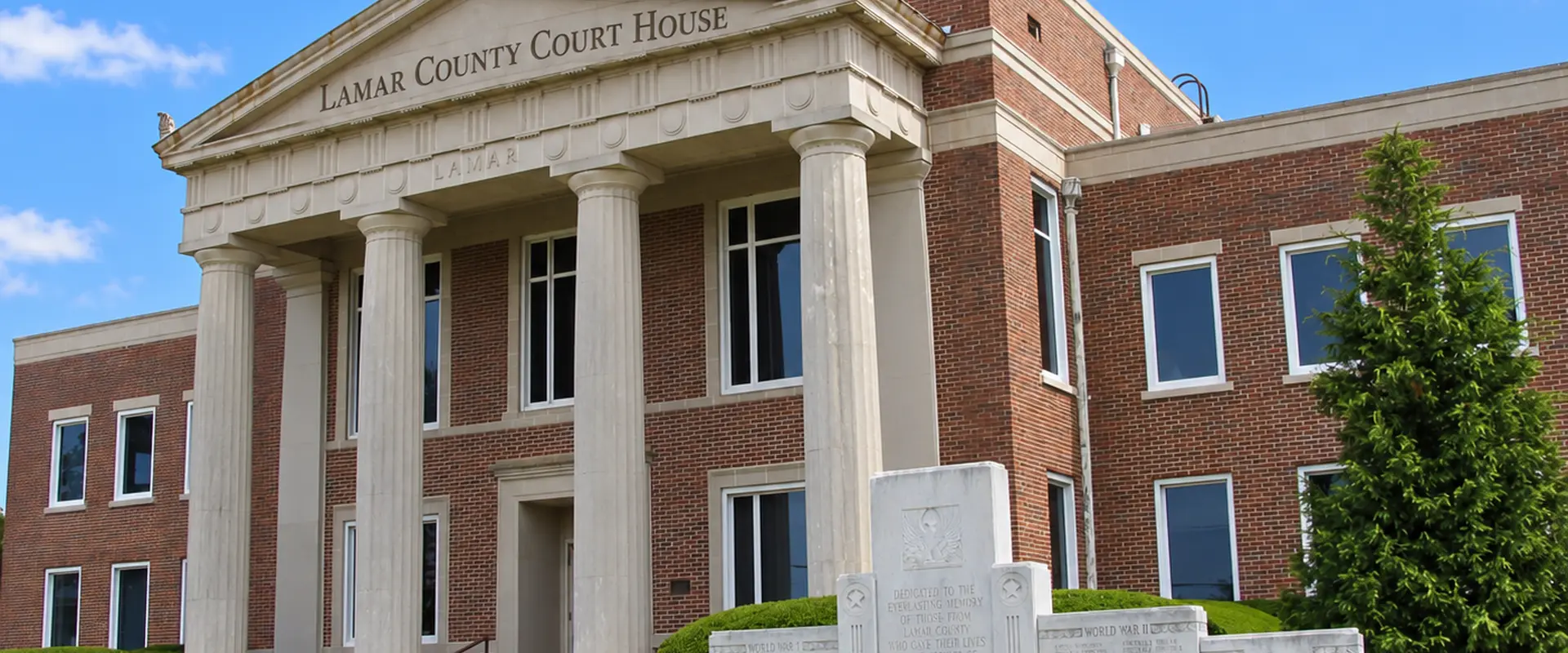
Residents of the county may need access to court records in person. Those who need certified documents or older records can visit the Lamar County Courthouse in Barnesville, and the Clerk of Superior Court can help locate specific case files, such as archived documents, certified copies, and physical case files. Official court records are important because they are mandated for legal or government purposes. When seeking official court records, it is best to bring as much information as possible (such as names or case numbers) to help speed up the process.
 Archived Records
Archived records are those that have been decided by a judge or jury, or dismissed by a judge. When looking for archived court cases, the first place to check is with the Lamar County Clerk of Superior Court, as the courthouse maintains many archived files from the 21st century. The Clerk can also give advice on where to locate archived records. When looking for older court records, there are several options to try. Archived court case records can be found at the Georgia Archives online or by visiting the archives in Morrow. The Digital Library of Georgia also has some court records from Lamar County.
Overview of the Lamar County Court System

All Georgia state courts are governed by the Judicial Council of Georgia, and the Chief Justice of the Georgia Supreme Court is head of the Judicial Council. Georgia operates a multi-tiered court system, with the Supreme Court of Georgia as the highest appellate court, the state's court of last resort. The Court of Appeals of Georgia is Georgia's single state appellate court, parceled into five divisions with 15 judges, with three in each division, hearing a mix of civil and criminal appeals on a rotating basis.
Because Lamar County is one of the smaller counties in Georgia by population, the court system is also small. The highest trial court at the county level is the Lamar County Superior Court, which hears major civil and criminal cases. The county does not have a State Court; instead, the Lamar County Magistrate Court hears administrative proceedings as well as minor civil and criminal cases. The Lamar County Clerk of Superior Court handles records for all the courts in the county. Finally, there is one Municipal Court in the county, the Barnesville Municipal Court, which hears minor traffic citations and ordinance violations occurring within its city limits.
Types of Courts in Lamar County, Georgia
 Superior Court
The Lamar County Superior Court is the county's major trial court, and it hears family law cases, major civil cases, and criminal felony cases. The Superior Court system in Georgia is divided into geographic districts, with each county assigned a judicial district to share the caseload, which is especially important in smaller counties. Lamar County is in the Towaliga Judicial Circuit, with two other counties in west Georgia: Butts and Monroe. All of the judges in the Superior Court rotate through counties to hear court cases at the county courthouse.
Jurisdiction:
- Major civil suits greater than $15,000 in damages
- All felony cases
- Land title disputes
- Divorces, child custody cases, and child support
- Adoptions
- Civil cases with rulings rather than monetary damages
- Appeals from the Municipal or Magistrate Courts
Primary Location: Lamar County Courthouse, Barnesville
 Magistrate Court
Lamar County's small population means that it does not have a state court. Instead, the county splits criminal and civil trials into two courts: low-level criminal and civil cases are held in the Magistrate Court, and higher monetary or criminal cases are heard in Superior Court. There are no jury trials in the Magistrate Court, and all cases are heard by a Magistrate Court judge.
Jurisdiction:
- Arrest warrants
- Civil cases under $15,000
- County ordinance violations
- Evictions and distress warrants (allow the landlord to sell the tenant's property)
- Misdemeanors
- Search warrants and court summonses
- Small claims
Primary Location: Lamar County Courthouse, Barnesville
 Probate Court
Lamar County Probate Court holds hearings involving a deceased person's property. Probate Courts in Georgia also ensure legal protections for incapacitated or mentally ill adults through guardianship arrangements.
Jurisdiction:
- Guardianship of adults who are incapacitated or mentally ill
- Wills and estates
- Marriage licenses
Primary Location: Lamar County Courthouse, Barnesville
 Juvenile Court
The Juvenile Court is also a separate court from the other state courts. Lamar County juveniles charged with serious violent felonies (such as murder or aggravated child molestation) can be tried in adult court beginning at age 13 under Georgia law, but there has to be a hearing to transfer the juvenile to adult court.
Jurisdiction:
- Juvenile delinquency (crimes committed by juveniles under 17)
- Hearings for juveniles who may be tried as an adult
- Juvenile dependency (child abuse or neglect)
- Juveniles who are developmentally incapacitated or have a mental illness
Primary Location: Lamar County Courthouse, Barnesville
 Municipal Court
Lamar County has only one Municipal Court, the Barnesville Municipal Court. Municipal Courts hear city traffic and ordinance violations.
- Traffic or parking violations, such as parking or speeding tickets
- City ordinance violations, such as public intoxication or illegal dumping
Primary Location: Barnesville City Hall, Barnesville
How to File a Case in Lamar County

Filing a court case in Lamar County requires attention to detail to ensure cases aren't delayed or dismissed. That's why understanding the filing steps to take before filing a case can help residents save time and frustration. Here are the steps residents can take for filing a civil case in Lamar County.
 Step 1: Choose the Correct Court
One advantage of Lamar County's population size is that there are only a few courts. Residents will file civil cases only, so they will file in Superior Court (divorce, civil cases over $15,000, adoptions, child custody, land title disputes, and policy disputes), Probate Court (estates, wills, guardianships), Juvenile Court (juvenile dependency), or in Magistrate Court (evictions, landlord-tenant disputes, distress warrants, civil cases under $15,000, and small claims). If residents are unsure, they can contact the Clerk of Superior Court for guidance on which court to file in.
 Step 2: Complete Required Forms
The Lamar County Clerk of Superior Court does not have a list of forms on their page, but filers can access court forms on the Georgia Courts webpage. Also, Magistrate Court forms can be found on the Council of Magistrate Court Judges' website, with video tutorials to help residents complete their court forms. The Clerk of Superior Court's Office can help residents ensure that forms are filled out correctly and completely, and residents can call or visit the Clerk's Office.
 Step 3: File the Case
Residents of Georgia can file their court cases online or in person, but attorneys must file online, according to Georgia law. Resident filers can file their cases via eFileGA, but if they want to file their case in person, they can visit the Clerk of Superior Court's Office to file their paperwork.
 Step 4: Pay Filing Fees
Online filers in Lamar County will pay their civil case filing fees when they file via eFileGA, using a credit or debit card. In-person filers pay their filing fees at the Clerk of Superior Court's Office, and it accepts cash, credit or debit cards (with a small fee), money orders, or cashier's checks. If a Lamar County resident who cannot afford to pay the filing fees, they can file two documents with the court: the Pauper's Affidavit and the Pauper's Order. They must also be willing to prove financial hardship to the respective court.
 Step 5: Serve the Other Party
Once the court filings are complete, filers must make sure the defendant receives notification of the civil lawsuit. Georgia law prohibits filers from serving the defendant. Notification of the lawsuit must be done by a certified process server, a sheriff's deputy, or a neutral, unrelated adult. A Certificate of Service has to be filed with the Lamar County Clerk of Superior Court showing that service is complete.
 Step 6: Monitor the Case
Once a resident has filed all of the case paperwork, the next step is to keep track of the case's progress. Lamar County residents can track their civil cases through eFileGA or by calling or visiting the Clerk of Superior Court's office.
Lamar County Courthouse Directory
Lamar County Courthouse (Superior, Magistrate, Juvenile and Probate Courts)
Barnesville
Address: 326 Thomaston Street #7, Barnesville, GA 30204
Phone: (770) 358-5145
Website: Lamar County Clerk of Superior Court
Barnesville City Hall (Municipal Court)
Barnesville
Address: 109 Forsyth St, Barnesville, GA 30204
Phone: (770) 358-0181
Website: Barnesville City Hall
Legal and Self-Help Resources
If a Lamar County resident is facing challenges navigating the court system, know that there are resources available to help them.
- The Georgia Legal Services Program (GLSP) has attorneys ready to help low-income Georgians with their civil case issues. The website lists lawyers who are willing to do pro bono (free) legal work or work at a sliding scale.
- Georgia residents also have access to the Elderly Legal Assistance Program. The program is available for seniors over the age of 60 needing legal assistance with their civil cases, such as housing, disability discrimination, or benefits.
- Victims of domestic violence in Lamar County have access to court resources. The Georgia Coalition Against Domestic Violence offers legal resources for victims, including legal resources to help with custody and child support, divorce, and protection orders.
FAQs
How do I search for a criminal case in Lamar County?
Residents can search for a criminal case either online or in person. Criminal court records for the Lamar County Superior Court can be found online at the Georgia Courts website. Magistrate Court records can be found at the Georgia Superior Court Clerks' Cooperative Authority (GSCCCA) website. Residents who are unsure where the case was filed, are missing information about the case, or need to widen their search can use a third-party search engine, such as CourtCaseFinder.
Are court records public in Lamar County?
Georgia has an Open Records Law that means court records are viewable, searchable, and public. Exceptions would include all juvenile court records, because of the age of the juvenile, adoption records, and some domestic cases, such as orders of protection or custody. Judges can also order court records be sealed.
Where can I find eviction records?
Generally, eviction records can be found on the Georgia Superior Court Clerks' Cooperative Authority (GSCCCA) website. People can also visit the Lamar County Superior Court Clerk's office for records as well. If the resident is looking for foreclosure records rather than eviction records, those would be held by the Superior Court, which also means a visit to the Court Clerk's Office.
Other Counties in Georgia
- Appling
- Atkinson
- Bacon
- Baker
- Baldwin
- Banks
- Barrow
- Bartow
- Ben Hill
- Berrien
- Bibb
- Bleckley
- Brantley
- Brooks
- Bryan
- Bulloch
- Burke
- Butts
- Calhoun
- Camden
- Candler
- Carroll
- Catoosa
- Charlton
- Chatham
- Chattahoochee
- Chattooga
- Cherokee
- Clarke
- Clay
- Clayton
- Clinch
- Cobb
- Coffee
- Colquitt
- Columbia
- Cook
- Coweta
- Crawford
- Crisp
- Dade
- Dawson
- Decatur
- Dekalb
- Dodge
- Dooly
- Dougherty
- Douglas
- Early
- Echols
- Effingham
- Elbert
- Emanuel
- Evans
- Fannin
- Fayette
- Floyd
- Forsyth
- Franklin
- Fulton
- Gilmer
- Glascock
- Glynn
- Gordon
- Grady
- Greene
- Gwinnett
- Habersham
- Hall
- Hancock
- Haralson
- Harris
- Hart
- Heard
- Henry
- Houston
- Irwin
- Jackson
- Jasper
- Jeff Davis
- Jefferson
- Jenkins
- Johnson
- Jones
- Lanier
- Laurens
- Lee
- Liberty
- Lincoln
- Long
- Lowndes
- Lumpkin
- Macon
- Madison
- Marion
- Mcduffie
- Mcintosh
- Meriwether
- Miller
- Mitchell
- Monroe
- Montgomery
- Morgan
- Murray
- Muscogee
- Newton
- Oconee
- Oglethorpe
- Paulding
- Peach
- Pickens
- Pierce
- Pike
- Polk
- Pulaski
- Putnam
- Quitman
- Rabun
- Randolph
- Richmond
- Rockdale
- Schley
- Screven
- Seminole
- Spalding
- Stephens
- Stewart
- Sumter
- Talbot
- Taliaferro
- Tattnall
- Taylor
- Telfair
- Terrell
- Thomas
- Tift
- Toombs
- Towns
- Treutlen
- Troup
- Turner
- Twiggs
- Union
- Upson
- Walker
- Walton
- Ware
- Warren
- Washington
- Wayne
- Webster
- Wheeler
- White
- Whitfield
- Wilcox
- Wilkes
- Wilkinson
- Worth
Table of Contents
